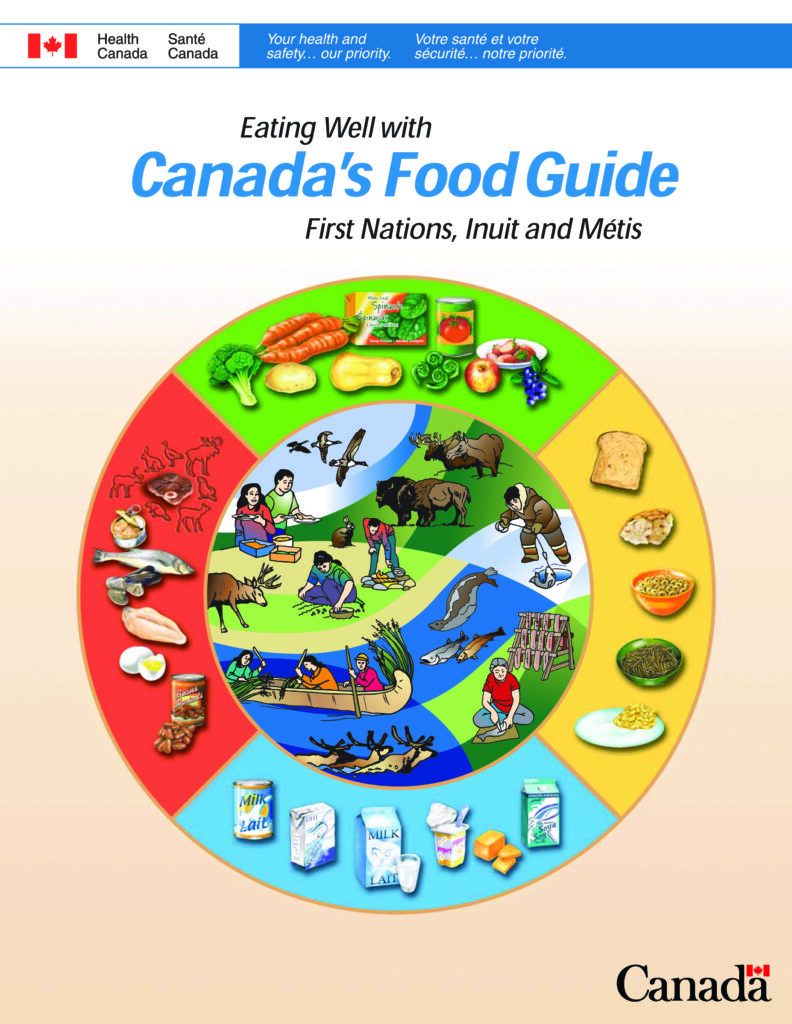
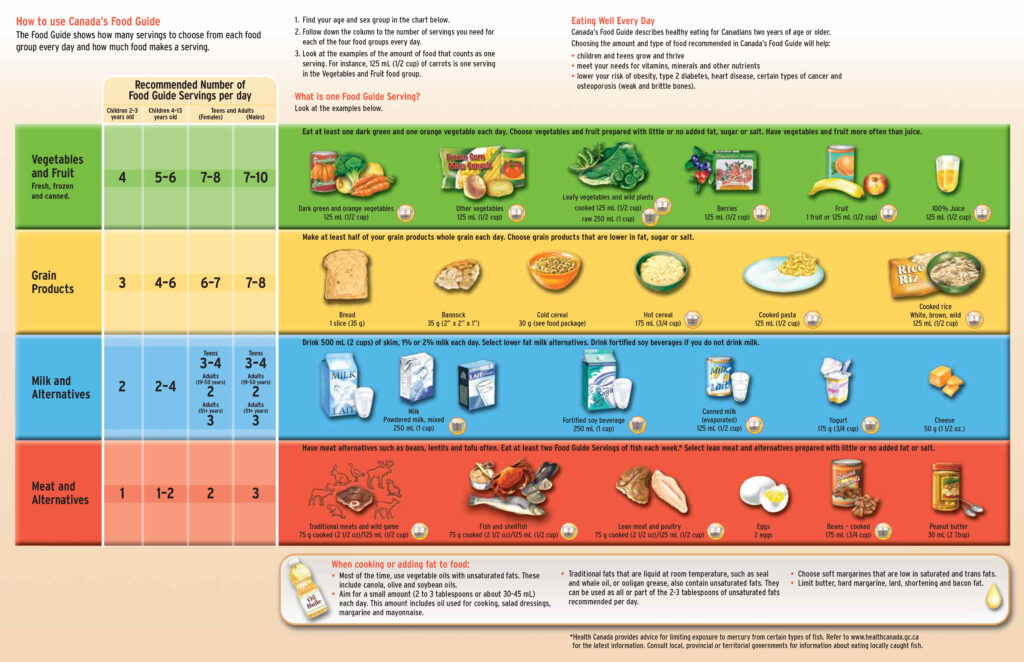
Four Healthy Eating Strategies from the First Nation Health Authority: Healthy foods give you a wide variety of nutrients that your body needs to grow, heal and function properly. These nutrients include: carbohydrates, protein, fat, fiber, as well as the very essential vitamins and minerals.
Healthy Eating Strategies

Balance
Eating foods from all nutrient groups; Meats, Fish, Seafood and Alternates; Grain Products; Calcium Containing foods and of course, Berries, Roots, Vegetables and Fruits.
Moderation
- Eat portions that satisfy your needs and help you to achieve a healthy weight.
- Try to make half of your plate veggies and fruits, limit grain or starchy foods, as well as meat, fish and alternates to one quarter of the plate each
Variety
- It’s important to eat different foods from each nutrient group. If carrots are the only vegetable you like to eat, try expanding your menu by agreeing to try a new vegetable each week. Although carrots are nutritious, they cannot provide exactly the same nutrients that you will find in broccoli or an avocado.
- There is no ONE PERFECT food.
Close to Nature
- Frequently choose foods that have been through as little processing as possible. A good example is to eat fresh fruit more often than to drink fruit juices. To take it even further, 100% fruit juice is a healthier choice than a fruit ‘drink or beverage’ which is only mildly better than a fruit flavoured pop.
Following Canada’s Food Guide and limiting foods and drinks which contain a lot of calories, fat, sugar or salt are important ways to respect your body. Examples of foods and drinks to limit are:
- pop
- fruit flavoured drinks
- sweet drinks made from crystals
- sports and energy drinks
- candy and chocolate
- cakes, pastries, doughnuts and muffins
- granola bars and cookies
- ice cream and frozen desserts
- potato chips
- nachos and other salty snacks
- french fries
- alcohol