Beware and Take Action

Beware!

  • Checkout sets people up to buy food and drinks that harm their health
  • Researchers found that 60% of shoppers bought candy and 45% bought soda at checkouts ; even though they deliberately ignored these items in the aisles
  • Purchases at checkout do not displace planned purchases- they add to them

Source: cspinet.org quoting studies

Obesity and other diet-related diseases are public health problems that demand public health solutions. Policies can protect people, especially children, from marketing practices that manipulate their food choices and push them toward automatic choices that harm their health.

Displaying products at checkout is a powerful form of marketing that prompts people to buy foods and beverages that they had not planned to buy. Shoppers can avoid a soda or candy aisle, but they cannot avoid checkout. (source: cspinet.org)
Watch out for soda and sugary drinks. For yourself and for your children.

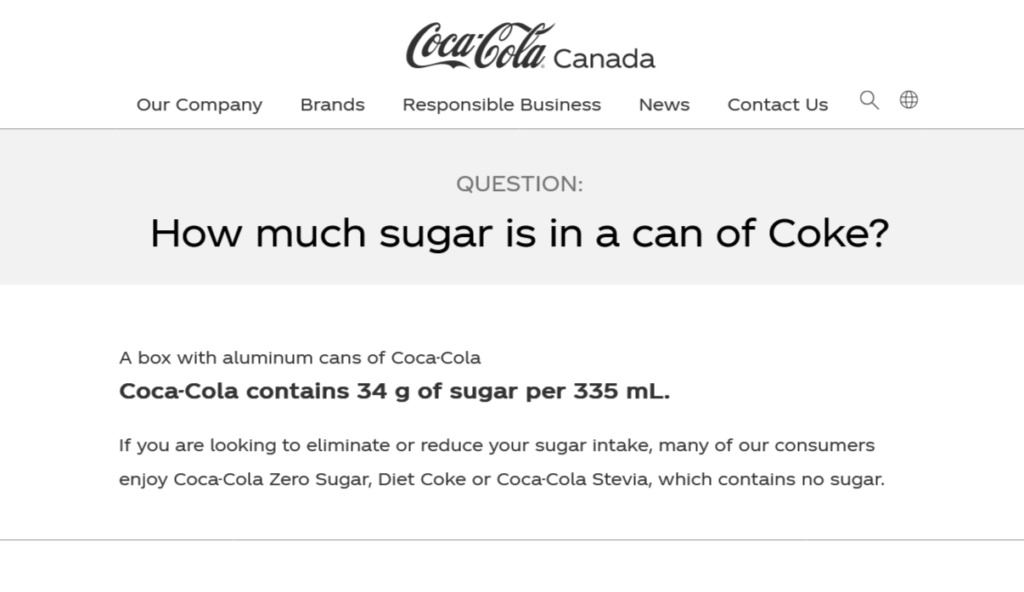
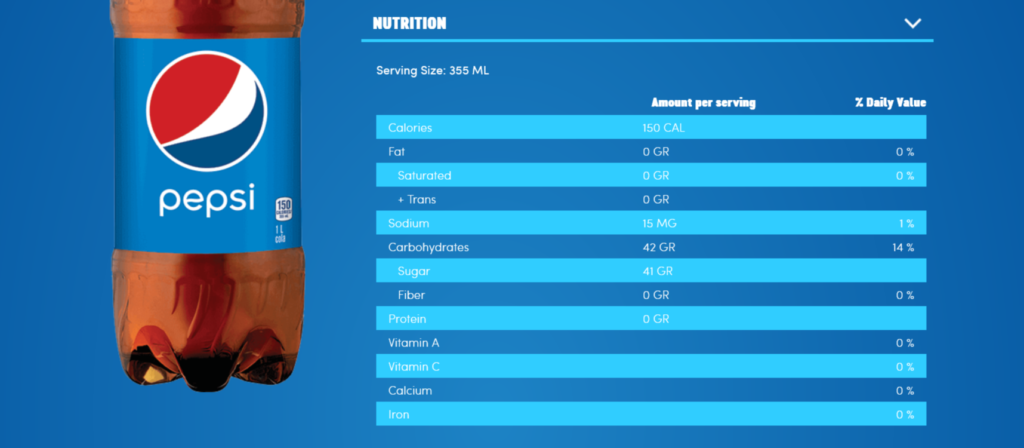
The American Heart Association suggests a limit for added sugars — no more than 100 calories from added sugar a day for most women and no more than 150 calories from added sugar a day for most men. That’s about 6 teaspoons (24 grams) of sugar for women and 9 teaspoons (36 grams) of sugar for men. (Source Mayoclinic.org). According to Coca-Cola Canada, a single  can of coke has 34 grams of sugar.  According to Pepsi, an equal serving of Pepsi has 41 grams of sugar.

And according to Pepsi Canada ( https://www.pepsi.ca/products/pepsi-1l)  a single serving of Pepsi has 41 grams of sugar.

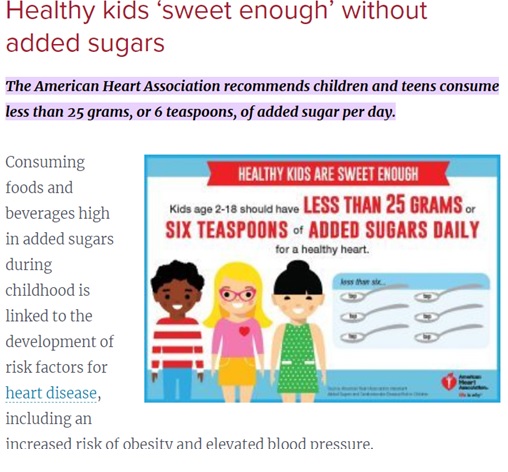
The American Heart Association, recommends children and teens consume less than 25 grams of sugar per day.  A single can of Coke or Serving of Pepsi has much more than that. Also remember that the labelling requirements you read do not apply to single pieces of candy. So you would not know how much sugar is being ingested.  You would not know for example if the product has aspartame.

According to healthline.com, whenever a product is labeled “sugar-free,” that usually means it has an artificial sweetener in place of sugar. While not all sugar-free products contain aspartame, it’s still one of the most popular sweeteners. It’s widely available in a number of packaged goods. Some examples of aspartame-containing products include: diet soda, sugar-free ice cream, reduced-calorie fruit juice, gum, yogurt, sugarless candy. Dr. Alan Gaby, MD, reported in Alternative Medicine Review in 2007 that aspartame found in commercial products or heated beverages may be a seizure trigger and should be evaluated in cases of difficult seizure management.

Confectionery and snack food products are often prepackaged in very small packages. When the label of a prepackaged product has an available display surface of less than 15 cm2, it is always exempt from displaying a Nutrition Facts table, even when it contains aspartame, neotame, sucralose or acesulfame-potassium, or meets any other conditions listed in B.01.401(3) [B.01.469, FDR].

This exemption is not limited to one bite confections sold individually, but also applies, for example, to very small packages of gum, rolls of hard candy and very small packages of mints.

Source:  https://inspection.canada.ca/food-label-requirements/labelling/industry/confectionery-chocolate-and-snack-food-products/eng/1392136343660/1392136466186?chap=7

Take Action!

You can make a change in your community!

Middle School Students Convince Local Walmart to Try Healthy Checkouts

“Do you care about the kids in your community?” That was one of the tough questions that middle school students in Shasta County, California, posed to the manager of a local Walmart in an effort to improve the health of their community. The Walmart is the biggest retailer in town and serves as the primary food store for many residents, and the kids knew that the placement of candy and soda in the checkout aisles prompts impulse buys. They asked the manager to offer healthier options, such as apples, carrot sticks, peanuts, and dried fruits instead (Haggard, 2014).

At the request of the kids and their allies at the Shasta County Public Health, Health and Human Services Agency, the Walmart store manager agreed to try a healthy checkout aisle. In the first month, sales of the items in the healthy checkout aisle as much as quadrupled. Not only did that Walmart expand the healthy checkout concept to a second aisle, but two other Walmarts in the area created healthy checkout aisles themselves, and the county health agency has received inquiries from around the country about replicating their success (Haggard, 2014). (source: cspinet.org)